Family History Centre
Church of Jesus Christ of Latter-Day Saints
Moncton NB


2070 Mountain Road
Moncton, NB
(506) 858-9702

Websitewww.familysearch.org

Hours of Operation: Thursday, 9am-noon – or by appointment
Closed on holidays, two weeks at Christmas and in bad weather. In general, if school is closed – so is the Centre. Telephone before coming if unsure of weather conditions.

Directions
From the Trans Canada Highway (Route 2) take Exit 450 for Mountain Road. Follow Mountain Road into the city. The Family History Centre is located at the corner of Mountain Road and Maplehurst Drive.

Family History Centres are found throughout the world and are privately funded by the Church of Jesus Christ of the Latter-day Saints.

The Family History Centre provides access to the largest collection of free family history, family tree, and genealogy records in the world. It also provides research guidance, forms, and an opportunity to preserve and share your family history.

A list of materials available is on the website. Some materials are on-site and are card indexed. Off-site materials can be acquired on inter-library loan for a small fee. Materials through inter-library loan can be made accessible for a short period, long term and indefinite terms. We have several sources for Irish research.

Materials located within the Centre are available free of charge to the public. There is a fee for copy services and ordering microfilms and microfiche from the main Library in Salt Lake City, Utah, USA. Some family history forms are available for pennies a copy. We are not a lending library.

There are washroom facilities, free parking, no stairs to climb and an area to eat lunch if you bring one from home. Library rules are posted on the bulletin board as you enter and include: please maintain a quiet atmosphere; smoking is not permitted in the building or on the church grounds; and no food and drinks are permitted in the library.

Paper photocopies: 15 cents a copy
Microfiche/microfilm copies: 25 cents a copy
Computer print-outs: 25 cents a page
Centre d’Études Acadiennes
Université de Moncton

www.umoncton.ca/etudeacadiennes/centre/cea.html


Located on the Université de Moncton campus, the Centre d’Études Acadiennes is found on the lower level of the Bibliothèque Champlain in Moncton, NB.

Mailing address:
Centre d’Études Acadiennes
Université de Moncton
Rue Clément Cormier
Moncton NB E1A 3E9
Telephone : (506) 858-4085
Genealogist : Stephen White

It is sometimes thought that the Centre d’Études Acadiennes is a research and genealogy centre for mostly Acadian families and communities. Indeed, it has much more. It is a valuable research centre for information on Irish Catholic families in south-eastern New Brunswick – from Kouchibouguac and Rogersville in the north – all the way down to the Nova Scotia border.

All of the Catholic parish registers for the Archdiocese of Moncton are on microfilm from the beginning years of each parish up to 1926. These include the following parishes (the year of their creation is in brackets).

Kent County:
Rogersville (including Collette) (1877)
Acadieville (1877)
St Ignace (1887)
Richibucto (town) (1864)
Rexton (including Chapel Point, South Branch) (1871)
Richibucto Village (1796)
Ste-Anne-de-Kent (1887)
Adamsville (1904)
St Paul (1885)
Ste-Marie-de-Kent (1869)
Bouctouche (1800)
St Antoine (1920)
Cocagne (1800)
Notre Dame (1889)
Grande Digue (1800)

Westmorland County :
Moncton (St Bernard’s) including Irishtown (1872)
St Anselme (1832)
Shediac (1863)
Scoudouc (1850)
Memramcook (1806)
Barrachois (1812)
Aboujagane (1885)
Cap Pelé (1813)
Shemogue (1916)
Melrose (1868)
Port Elgin (1926)
Dorchester (1885)
Sackville (1881)

Albert County:
Riverside (includes all parishes in Albert County including New Ireland, Goshen, Anagance, Salisbury, Fredericton Road, Hillsborough and Albert Mines) (1866)

Queens County: Chipman (1862)

Nova Scotia:
Amherst (1888)
Menoudie (including Joggins) (1848)

Other resources:

  • Parish register marriages 1800-1900 are index filed for easy access.
  • Some copies of parish registers are available in book form – but incomplete.
  • Some copies and microfilms of parish registers from the Diocese of Bathurst are also housed here but they are also incomplete.
  • Census returns – Gloucester, Northumberland, Kent, Westmorland and Albert Counties – some in alphabetical book form.
  • Some cemetery transcripts – Elmwood cemetery and St Bernard’s cemetery, Moncton.
  • Index of deeds and probate records.
 

Parking:
Behind the centre on rue Clément Cormier. Payment is made at the kiosk in the parking lot for the amount of time you will be in the centre ($1.75/hr). The ticket should be left in a visible spot on your dash while in the Centre.

Hours of operation:
Monday-Friday 8:30 AM to 4:30 PM
Thursday evening – 7:00 – 10:00 PM
Closed on weekends

You must sign in upon arrival.

Staff: Bilingual and very helpful.

Pencils, rather than pens, are recommended.

Copies:
Photocopier is self-serve – 10 cents a copy
Microfilm – 25 cents a copy

No food is permitted in the centre but there is a room with vending machines just off the main lobby of the Champlain Library upstairs.

Albert County Museum

www.albertcountymuseum.ca


ACMLogo


Address:
12 Hopewell Cross Road
Hopewell Cape, NB
E4H 3G9

Telephone: (506) 734-2003
E-mail: This email address is being protected from spambots. You need JavaScript enabled to view it.

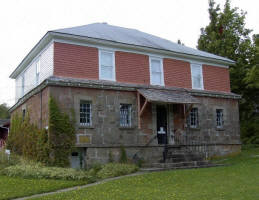
Established and operated by the Albert County Historical Society Inc., the Albert County Museum is only 2 minutes from the famous Hopewell Rocks on Route 114, the Fundy Scenic Drive. Located in the picturesque community of Hopewell Cape, the Museum occupies four separate buildings on one site: the old County Gaol, the County Courthouse, a blacksmith’s shop and a barn-like building whose interior has several rooms and displays representing early Albert County life. The reference resource room is located in the old County Courthouse.
 

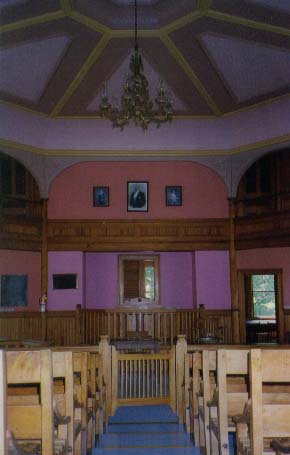
Albert County courthouse

Albert County Courthouse


Hours of Operation: Mid-June to Mid-September – 9:30am – 5:30 daily

Off-season: Open by appointment 

Admission: Adults – $4.00

Seniors and Students – $3.00

Admission is for both the museum and the reference resource room.

The Albert County Museum has information on many of the settler families of Albert County – a colourful procession of pioneers, artisans, explorers, shipbuilders, farmers, a few charlatans, our own Prime Minister, and even one axe murderer.


Interior Albert Co Courthouse

Interior Albert Co. Courthouse


The Resource Room at the Albert County Museum is the spot to research your Albert County family history. There are some family histories but also some personal diaries, sailors’ logs, maps, family photos and even scrapbooks.

A list of materials that would be of helpful for searching your New Brunswick Irish roots include the following:

Census returns: 

Albert County 1851, 1871, 1881, 1891, 1901
Kings County1851

Westmorland County 1851, 1861, 1871
Gloucester County 1861

 
old Albert Co Gaol

Old Albert County Gaol


Marriage register – Albert County 1846-1887 
Marriage register – Westmorland County 1790-1856 
Albert County Probate Records 1846-1867 
Albert County Records – Libro Index 1846-1977 (land transactions) 
County Birth Registers Index 1801-1899 
Crown Land Grant Index 
The Maple Leaf 1890-1901 (genealogical/historical transcriptions) 
Catholic Cemeteries of Albert County 
Cemeteries of Albert County, New Brunswick 
New Brunswick Vital Statistics from Newspapers 1829-1834 
Pioneers of New Brunswick 1783-1963 
Albert County Names Database 
Early Families – Albert and Westmorland County Regions 
Sheriffs, Constables, Wardens and Jailors 1901-1959 
Albert County Scrapbook, Volume 2 
Albert County Vessels 
Reflections of an Era: Portraits of 19th Century New Brunswick Ships
Shepody Loyal Riverside Consolidated School 1905-1980 
History of Albert County – Includes The Busy East of Canada April-May 1925 
History of Riverside-Albert 
History of Riverview 
Caledonia Albert County NB – the last 200 years 
Elgin Revisited 
The Women of Albert County 
Hillsborough Women’s Institute – History of the Village of Hillsborough 
History – Dawson Settlement School 
New Brunswick Genealogy Society – Generations various 1983-2002 
Index of Surnames being researched by the NBGS, 1982 
The Nova Scotia Genealogist – various 1996-1996


St. Michael’s Museum & Genealogical Centre

By Caroline Daley


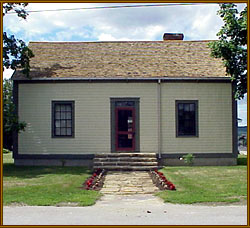
St Michaels Museum

Photo – courtesy of St Michael’s Museum & Genealogical Centre

P.O. Box 368
10 Howard Street
Miramichi, NB
E1N 3A7
Phone: (506) 778-5152
Fax: (506) 778-5156

Email: This email address is being protected from spambots. You need JavaScript enabled to view it.

Website: www.saintmichaelsmuseum.com

Fr. John Sweeny built St. Michael’s Rectory in 1846 and it was from this building that he set out for Middle Island to minister to the sick and dying passengers of the famine ship “Looshtauk”. Fr. Sweeney had lived in the rectory for three years when Father Richard Veriker came to replace him as parish priest, followed by Rev. James Rogers in 1860. Rev. Rogers was appointed the first Bishop of Chatham in that year and through his energy, St. Michael’s College was established. A story was told stating that Bishop Rogers stood gazing at the one and a half storey little building that was to become the Episcopal residence and turned to Fr. John Sweeney and said with a smile, “This is the house that Jack built.” His statement was an obvious reference to the fact that John (Jack) Sweeney had directed the construction of the building while he was parish priest of Chatham. Bishop Rogers resided in this small building known as the first Bishop’s residence where he conducted studies for several seminarians, who became professors of St. Michael’s Male Academy formerly known as St. Patrick’s Temperance Hall School.

This historic little dwelling, 36’ x 25’, referred to as the cradle of all the parochial institutions, is situated at 10 Howard Street, Chatham, New Brunswick.

This building was the first Hotel Dieu Hospital; on the first floor of this small house were four rooms, two on the right and two on the left of the entrance hall. The first room on the left was destined for a supply room and parlour, the second was the chapel. The hall served as a parlour for the sick during the day and at night at one time it was the sleeping quarters for a little orphan boy who arrived a few days after the sisters. In case of need, this hall was used for a hospital ward. The first room on the right, containing three beds, constituted “the hospital”; the second served the purpose of refectory and pharmacy; when needed this room was also used as a ward. The three rooms on the second floor were occupied by the sisters. The kitchen was in the rear with the attic above being divided into two rooms; one occupied by an old gentleman who had placed himself at the service of the sisters and the other by an old lady, an invalid, and a little orphan girl. The chronicles tell us it was very often filled with numbers of poor, who came for medicine, or with whole families of Indians who entered without ceremony to warm themselves, or “visit the sisters.”

The building was also used as a civic hospital during the 1903 diphtheria epidemic. In 1914 St. Joseph’s School for boys opened its doors here and remained open until 1931. When the school closed, the building was moved to the grounds of the convent and used as an oratory for the sisters and later a storage area.

In 1974 a small group of eight people met at St. Michael’s Rectory and at the invitation of Rev. B.M. Broderick a small group of St. Michael’s parishioners met to discuss the idea of starting a history of St. Michael’s Parish. Mr. John Connell was appointed chairman and Mrs. F.H. Barry, secretary. The first significant project of the group, under the direction of Mr. Connell, was the establishing of a display in the unused part of St. Michael’s Basilica, known as the Lady Chapel. This display of artifacts, photos, church vestments, etc. continues to be of interest to local people and has become an attraction for tourists who see the landmark, St. Michael’s Basilica, and stop by for a visit.

After a fire in 1979 that threatened to destroy the building, it was moved to its present location and became known as St. Michael’s Museum & Genealogical Centre which also houses a Catholic Book Store. This little building has survived three major fires over its 162 year history and managed to escape all of them with minimal damage.

In June 1981 the St. Michael’s Museum was officially opened and declared an historic site by a representative of the Department of Historical Resources of the Province of New Brunswick.

In June 1998, extensive exterior repairs and painting improved the outside appearance of St. Michael’s Museum. The summer of 1998 saw the demolition of Chatham’s fourth Hotel Dieu Hospital and stones from the site were transferred to the museum (First Hotel Dieu Hospital) for a Friendship Garden.

St. Michael’s Museum is home to the collections of Bishop James Rogers, Msgr. Raymond F. Hickey, Fr. Benedict J. Murdoch, Fr. Bernard M. Broderick and many others. If you are looking for information on your family history the museum has all census records, cemetery, baptism, marriage and death records, land grants, land petitions, family histories, ship builders checklist for Northumberland County, wills, school and church histories, sports photos, year books and photos from St. Michael’s Academy and St. Thomas College, local photos and books, The Commercial newspapers from 1899-1964, copies from three other newspapers, Louise Manny files, Edith McAllister files and much more related material.

The Catholic Book Store has available gifts for weddings, anniversaries, birthdays, baptisms, First Communion, Confirmation, greeting cards, rosaries, books and numerous other items.

We are available to do genealogical searches for a fee. Contact our website for more information.

The New Brunswick Provincial Archives


panb 300x128

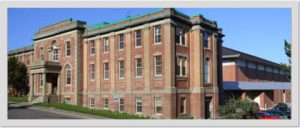
Provincial archives of New Brunswick


The documents in the Archives are provincial treasures. Many are fundamental in protecting the rights and interests of the people, or are essential for understanding and preserving our heritage and culture. Materials which are not in archives, particularly those in danger of being lost or destroyed, should be brought to the attention of the Archives staff.

The web site is very user friendly and offers the researcher vital statistics, both newspaper and governmental; historical images, and all documents pertaining to the history of New Brunswick. Further it offers guidance on using records, collecting and managing your information and directions in using their services to your best benefit.

The mailing address of the Provincial Archives is:

Department of Supply and Services,
Provincial Archives (Bonar Law – Bennet Building),
P.O.Box(6000)
Fredericton, N.B.
CANADA E3B 5H1,

tel.:(506) 453-2122
fax:(506)453-3288

The Archives are housed in the Bonar Law-Bennett Building centrally located on the campus of the University of New Brunswick, 23 Dineen Drive, Fredericton, New Brunswick and is open Monday to Friday from 10:00 until 5:00, Saturday from 8:30 until 5:00. They close for statutory holidays and hours may change in the Christmas and New Year period.

The Archives collects and preserves documents that have a bearing on the history of the province. It is the repository for all government records of enduring value. It also acquires documents or reproductions from individuals, families, churches, businesses, associations and others. It is the centre for primary research sources in New Brunswick history and attracts a wide range of visitors, including government and legal researchers, scholars in all branches of history, family historians, statisticians, and environmentalists. The Archives also supports the work of regional and thematic archives throughout the province by providing professional advice, service and assistance.

Most documents are viewed on microfilm. You may enter the archives armed with no more than a pencil and there are lockers provided. However, one may take photographs or request duplication for a small charge.

The archives hold 23,318 records of “Canadian Irish Famine Migration to New Brunswick 1845-1852” through which one can search either on line, or on site.

Established in 1967, the Provincial Archives of New Brunswick collects and preserves the documents of the people, institutions and government of the province. Most of the holdings are for the period from 1784, when New Brunswick was made a separate province of British North America. However, some materials relating to the earlier exploration, Acadian and pre-Loyalist periods have also been acquired.

Under provincial legislation the Archives has responsibility to assemble, and to make available for research, records bearing upon the history of New Brunswick. The Records Management Program ensures the regular transfer and archival retention of all non-current government records that have permanent legal and historical value. The records of individuals, churches, businesses and associations are acquired through donation of original material, and loans for copying.